
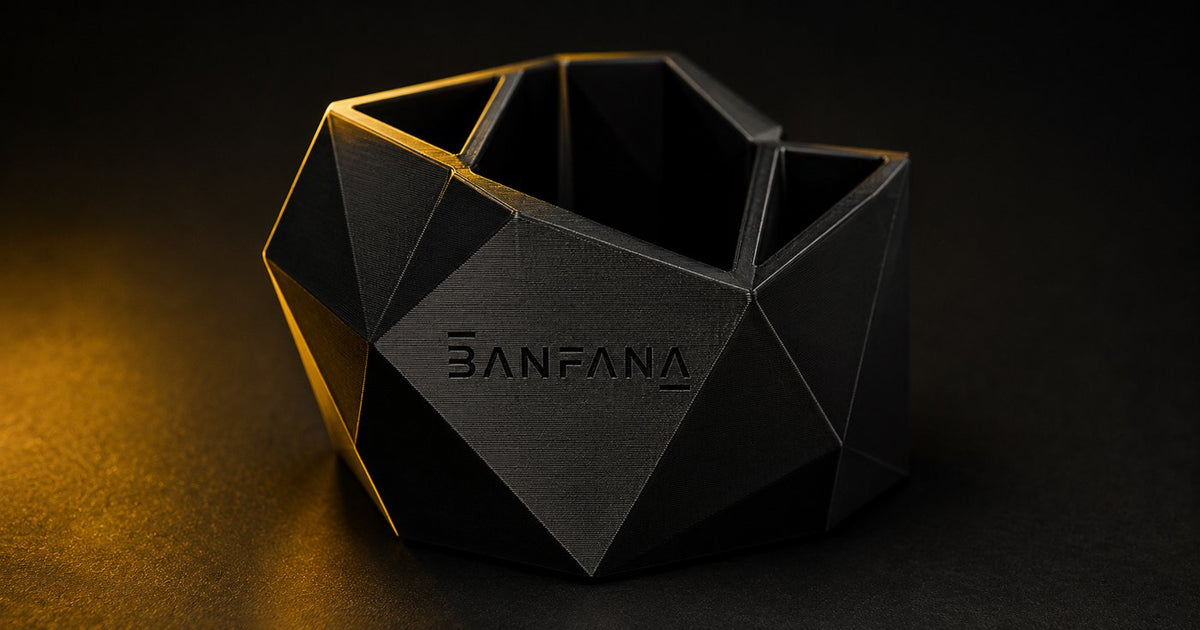
For years, "merch" meant one thing: print a logo on a blank. Shirts, mugs, tote bags. It worked, but everything looked the same because everyone used the same blanks. 3D printing is changing that — and it's opening a door for brands to make things that are genuinely theirs.
Why 3D-printed merch matters
The big unlock is small batches with no inventory risk. Traditional manufacturing punishes you for ordering fewer than a few hundred units. Desktop and on-demand 3D printing flips that: you can make ten of something, see if people want it, and scale only what works.
That changes what's possible:
- Original shapes, not just printed blanks — keycaps, desk objects, phone stands, figurines.
- Personalization — names, dates, or one-off variants without a full production run.
- Rapid iteration — tweak a model overnight and reprint tomorrow.
The trade-offs
3D printing isn't magic. Per-unit costs are higher than injection molding at scale, finish quality varies, and materials have limits. It shines for low-volume, high-uniqueness products — exactly the sweet spot for a brand testing ideas or selling collectible drops.
How to start without overcommitting
Treat it like a science experiment. Design one object, print a small run, and list it properly — good photos, a clear description, real specs. If it sells, you've validated demand before spending on tooling.
The pattern is the same as with meme apparel: the physical thing is only half the job. The listing has to be structured and findable, or the coolest 3D-printed object in the world just sits there. See how a fully enriched catalog reads and use it as a template for your own drops.