
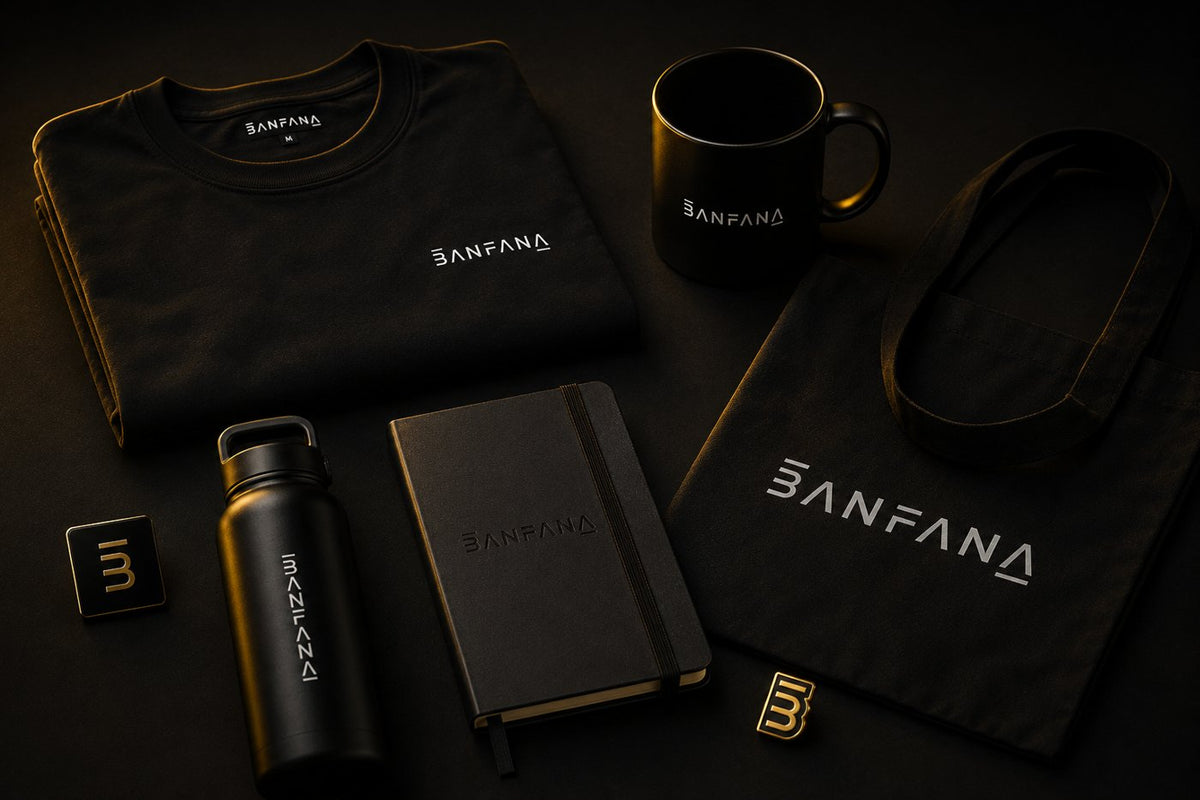
Full disclosure, again: nobody needs a Banfana enamel pin. So why does this store exist?
Because the best way to prove what product data enrichment does is to show it, not describe it. We needed a real catalog — real titles, descriptions, categories, images, reviews, and structured data — running on a real storefront, so you could click around and see the output of the Banfana feed engine in the wild.
What's actually being demonstrated
Look closely at any product page and you'll notice things a typical hastily-built store skips:
- Titles written the way Google reads them.
- Descriptions with benefit-led highlights, not a single vague sentence.
- Correct categories mapped to Google's taxonomy.
- Star ratings and reviews wired to structured data for rich results.
- Clean schema on every product, so listings qualify for more surfaces.
Every one of those was generated and organized automatically. That's the whole point: the difference between a catalog that ranks and one that doesn't is mostly this invisible layer of structure — and it shouldn't take a team of people a week to produce.
The self-aware part
Yes, the copy pokes fun at itself. The hero literally says the descriptions wrote themselves. That's not a bug — it's the pitch. If a demo store built to show off metadata can also be genuinely pleasant to browse, then the underlying data must be doing its job.
What's next
Maybe one day this stops being a demo and starts being a real shop — meme apparel, small-batch 3D-printed oddities, the occasional genuinely good tote. If it does, the foundation is already here. Take a look around and judge the data for yourself.
Banfana does this for real brands every day. If you run Google Ads or Shopping and want your feed working this hard, see what Banfana does or read how to appear more on ChatGPT (AEO).